Our Location
304 North Cardinal St.
Dorchester Center, MA 02124

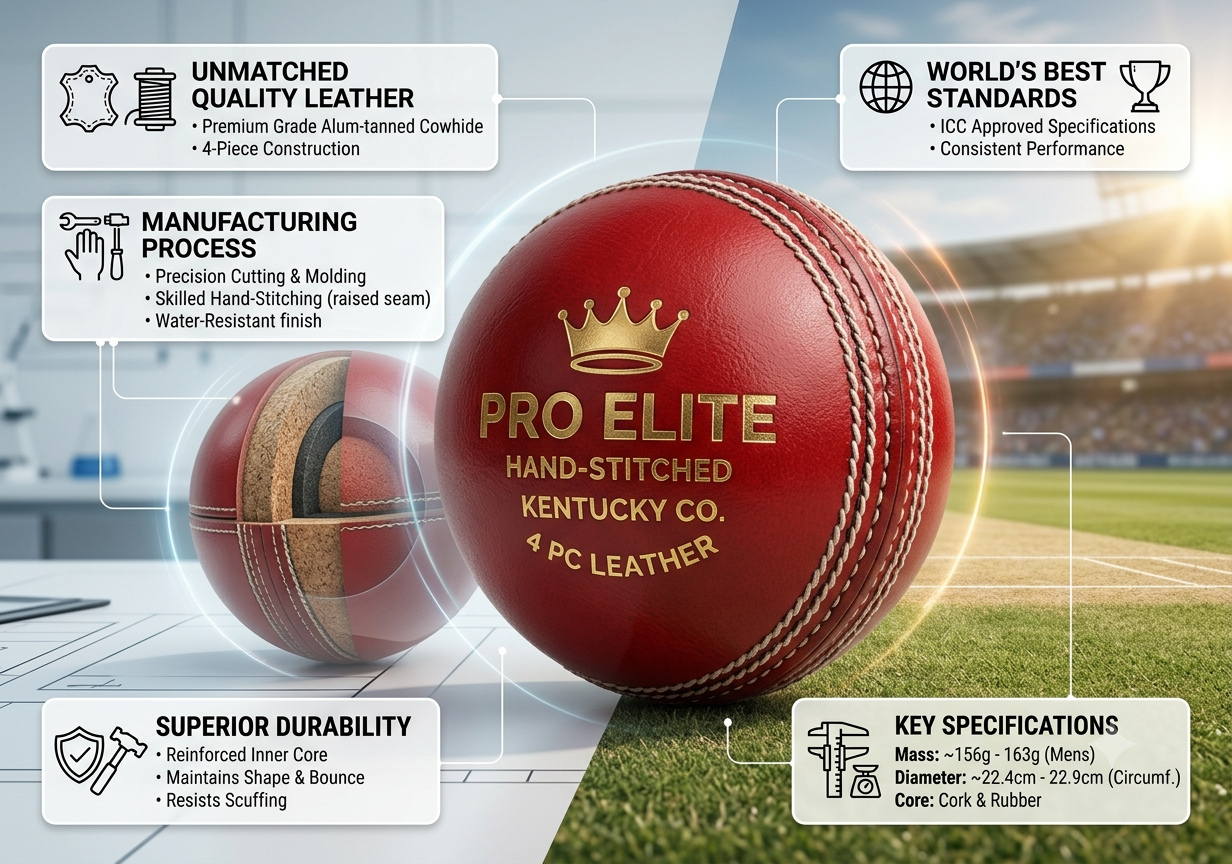
A high-quality leather cricket ball is one of the most important pieces of equipment in the game of cricket. From professional Test matches to club tournaments, cricket academies, and local competitions, the quality of the ball directly influences its performance, durability, bounce, seam movement, and overall playing experience.
However, not all leather cricket balls are manufactured to the same standards. The quality of the leather, inner core, wool winding, stitching, pressing, and finishing determines how well a ball performs during a match.
For cricket equipment manufacturers, wholesalers, retailers, and players, understanding the leather cricket ball manufacturing process is essential for choosing the right product.
In this comprehensive guide, we will explain how leather cricket balls are made, which materials are used, how to manufacture more durable cricket balls, which countries are known for producing quality cricket balls, and what makes a premium leather cricket ball different from an ordinary one.
A leather cricket ball is a hard cricket ball manufactured using a layered inner core and an outer leather cover.
The inner core is generally made from cork or cork-based material, combined with tightly wound yarn or thread. The outside is covered with shaped leather panels, which are stitched together to create the characteristic raised seam.
The core provides weight, firmness, and rebound, while the leather cover protects the inner structure and contributes to the ball’s surface characteristics. The raised seam also helps bowlers grip and release the ball.
A properly manufactured leather cricket ball should have:
These features are important for both match-quality and practice-quality cricket balls.
Manufacturing a durable leather cricket ball requires carefully selected raw materials. Each component contributes to the finished ball’s performance and lifespan.
Leather is the outermost component of a traditional leather cricket ball.
The quality of the leather affects the ball’s appearance, surface durability, seam construction, and resistance to wear.
Premium leather should be selected for consistent thickness, suitable flexibility, and structural integrity.
Important leather quality factors include:
The leather must also be compatible with the intended ball design and playing conditions.
Different manufacturers may use different leather-processing methods and finishes.
The cork-based core is located at the centre of the cricket ball.
It contributes to the ball’s weight, firmness, and rebound characteristics.
A good core should be uniformly shaped and sufficiently firm to withstand repeated impacts.
Poorly prepared core material or inconsistent compression can lead to uneven performance and premature deformation.
Wool yarn or suitable winding yarn is wrapped tightly around the core during manufacturing.
The winding process is one of the most important stages because it helps determine the ball’s firmness, internal structure, and ability to retain its shape.
The manufacturer must control winding tension and the amount of yarn used.
Inconsistent winding can produce a ball that feels uneven, loses its shape quickly, or behaves unpredictably.
The stitching thread holds the leather cover together and forms the raised seam.
Strong thread and consistent stitching are
